
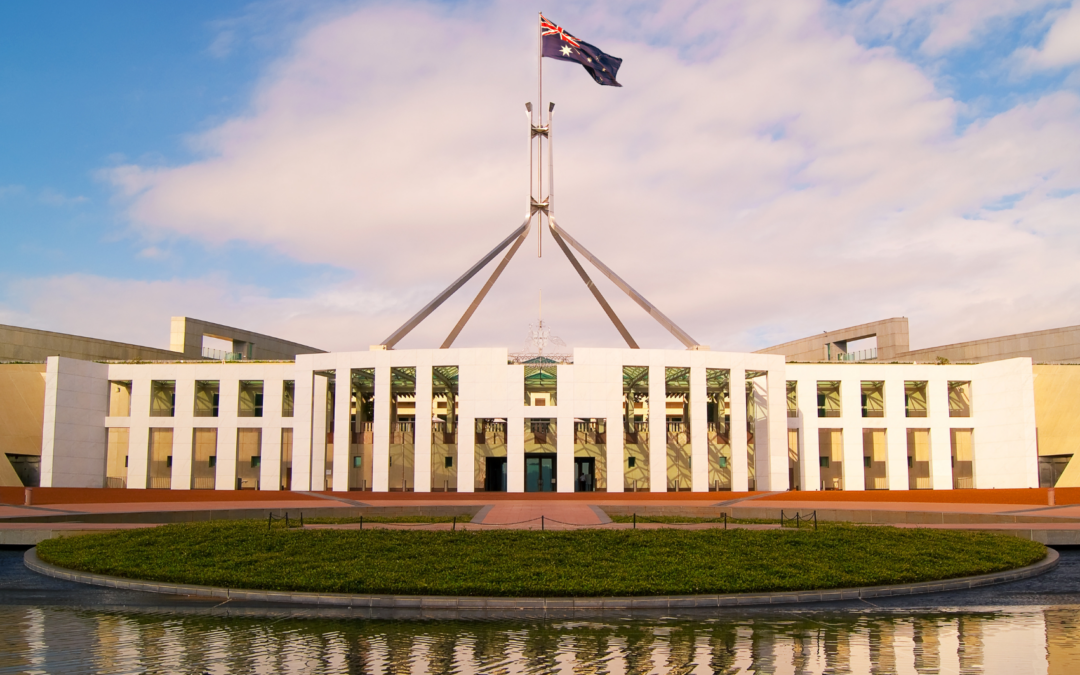
On Tuesday evening 12 May 2026 Treasurer Jim Chalmers handed down the Federal Budget for 2026-27.
The Australian Federal Budget 2026-27 seeks to redress issues of intergenerational inequity through the most consequential changes to asset taxation in decades.
CPA Australia says “the Federal Budget delivers a tax grab, not tax reform, placing a heavier burden on ordinary Australians, while undermining investment, productivity and business confidence”. CPA Australia has said “the Government’s changes to capital gains tax and investment settings will impact mum-and-dad investors, small business owners and younger Australians trying to build wealth”.
Treasurer Jim Chalmers’ fifth budget forecasts a deficit of $31.5 billion for the next financial year, as the Government balances Government spending on energy security with cuts to the National Disability Insurance Scheme and a major shakeup in the taxation of assets.
The Government is forecasting deficits of $31.0 billion, 34.4 billion and $25.3 billion in the years out to 2029-30. A surplus is not expected until 2036. The budget papers forecast that gross debt will be $982 billion at the end of this financial year (up from $940 billion forecast last year), with net debt hitting $616 billion before growing to $767.8 billion in 2029-30.
The year’s budget has been released against a backdrop of significant economic challenges, including global fuel price shocks, persistent inflation, rising interest rates and growing concerns around housing affordability.
Unless otherwise noted, the measures discussed are only announcements at this stage. There is no guarantee that they will be implemented. We will keep you up to date with key developments as things progress.
Key Announcements
Investors
Limits on negative gearing
Start date: 1 July 2027
The term ‘negative gearing’ refers to the situation where a rental property owner claims deductions for expenses associated with holding the property, that exceed the rental income that is received in the relevant income year.
The Government announced that existing negative gearing rules will only be available in connection with new builds.
From 1 July 2027, losses from established residential properties will only be deductible against rental income or the capital gains from residential properties.
Excess losses will be carried forward and able to be offset against residential property income in future years. These changes will apply to established residential properties acquired from 7:30PM (AEST) on 12 May 2026.
Properties acquired prior to this time, including contracts entered into but not yet settled, will be exempt from the changes until disposed of.
Eligible new builds will be exempt from the changes, ensuring the benefits of negative gearing are directed to investment that increases the housing stock.
Properties in widely held trusts and superannuation funds will be excluded under the changes, alongside targeted exemptions for build-to-rent developments and private investors supporting government housing programs.

CGT discount and pre-CGT exemption replaced by indexation and minimum tax rate
Start date: 1 July 2027
The CGT discount has enabled individuals, trusts and complying superannuation funds to reduce the taxable capital gain made on disposal of an asset that has been held for more than 12 months. The standard discount rate is 50% for trusts and individuals (although lower discount rates can apply to non-residents and temporary residents in some cases), with a 1/3 discount applying to superannuation funds.
From 1 July the 50% CGT discount will be scrapped and will be replaced by cost base indexation for assets held for more than 12 months, with a 30% minimum tax on net capital gains. These changes will apply to all CGT assets, including pre-1985 CGT assets, held by individuals, trusts and partnerships.
The 50% CGT discount will continue to apply to gains arising before 1 July 2027. Capital gains on pre-1985 assets arising before 1 July 2027 will remain exempt from CGT.
The CGT changes apply to all asset classes, including property and shares. The changes will apply to individuals, trusts and assets held by partnerships.
To maintain incentives for new housing supply, investors in new residential properties will be able to choose either the 50% CGT discount, or cost base indexation and the minimum tax.
Income support payment recipients, including Age Pension recipients, will be exempt from the minimum tax.
Resource: Negative Gearing and Capital Tax Reform
Minimum tax on family trust distributions
Start date: 1 July 2028
Distributions from discretionary trusts will be taxed at a new minimum of 30%, a change from the current model which taxes beneficiaries at their individual marginal tax rates.
Individuals and other non-corporate beneficiaries will receive a non-refundable tax credit for the tax paid by the trustee. The non-refundable credit will not be available for corporate beneficiaries (often referred to as a bucket company).
The minimum tax would not apply to other types of trusts such as fixed and widely held trusts, including fixed testamentary trusts, complying superannuation funds, special disability trusts, deceased estates and charitable trusts.
Some types of income such as primary production income, certain income relating to vulnerable minors, amounts to which non-resident withholding tax applies, and income from assets of discretionary testamentary trusts existing at announcement would also be excluded.
Resource: Minimum tax on discretionary trusts
Business and Employers
Instant asset write-off
Start date: 1 July 2027
The cost threshold for the purpose of applying the instant asset write-off for small businesses will be permanently increased to $20,000 from 1 July 2026. The instant asset write-off allows eligible small businesses with aggregated turnover of less than $10 million to claim an immediate deduction for the full cost of depreciating assets which cost less than a specified dollar threshold.
The Tax Institute has welcomed the Treasurer’s announcement, describing it as a practical and long-overdue step to support business investment and productivity. For many years, small and medium-sized businesses, and their advisers, have endured uncertainty about whether the measure will be extended for another year.
Loss carry-back for companies
Start date: 1 July 2026
Re-introduction of the loss carry-back provision will allow companies with an aggregated turnover of up to $1 billion to carry back tax losses from current years against taxes paid over the previous two years subject to a limit equal to the company’s franking account balance.
Loss refunds for small startup companies
Start date: 1 July 2028
From 1 July 2028 new small businesses that incur tax losses in their first two years will be able to convert those losses into a refundable tax offset. The offset can be claimed against fringe benefits tax and PAYG withholding paid, improving early cash flow for start-ups.
Individuals
A new tax offset
Start date: 1 July 2027
A $250 ‘Working Australians Tax Offset” will be available from 2027-28, which will increase the tax free threshold by $1,800 to $19,985 at a budgetary cost of over $3 billion per year.
The offset will be a permanent feature of the tax system and is aimed at taxpayers who derive income from work, such as employees and sole traders.
Resource: New tax cuts for Australian workers
$1,000 instant tax deduction for workers
Start date: 1 July 2026
Australian residents will be able to claim a $1,000 standard deduction from the 2026-27 income year onwards for work-related expenses without substantiation. Charitable donations, union fees and fees relating to professional association memberships would be claimed on top of this deduction.
Taxpayers who have incurred more than $1,000 in work related expenses, can claim actual expenditure as a deduction but will need to substantiate these expenses.
Resource: $1,000 instant tax deduction to deliver lower, simpler taxes for 6.2 million workers
Income tax cuts
Start date: 1 July 2026
Legislation has already been passed to ensure that the 16% tax rate on taxable income between $18,201 and $45,000 will drop to 15%. The rate will then drop to 14% from 1 July 2027.
What does the 2026 Budget mean for your Property?
By Peter Locandro, CEO Financially Sorted
Here are my thoughts…
Negative Gearing Scrapped
From 1 July 2027:
- Unable to claim loss of property expenses against personal income as a tax deduction
- Instead, you can carry losses forward on future income when the investment properties do become positively geared
- Exception 1: new house & land purchases
- Exception 2: existing investment properties before 12/05/2026.
What I Think:
- Rents will rise as investors need to be compensated
- Investors will have their borrowing capacity reduced by -30% as banks will not consider negative gearing to boost serviceability
- Novel investors are incentivised to buy house & land packages for negative gearing purposes, is this a poor investment decision?
Capital Gains Tax (CGT) now based on Indexation
Currently if you sell an investment property after 1 year, the profit is taxed at your income tax bracket + a 50% CGT discount.
From 1 July 2027:
- The indexation method means you will only pay tax on the real profit of the property price (the difference between the inflation-adjusted property price and the sale price).
What I Think:
- Investors unlikely to sell = less stock on the market
- More demand = more growth
- High cash-producing assets become more favourable.
Trusts @ 30% Tax
What this means:
All discretionary trusts will pay a minimum 30% tax on its income and distributions each year, reducing the tax benefits of splitting income between family members on lower tax rates. If you are a property investor in partiuclar, this could make trusts less tax-effective to distribute rental profits or capital gains.
What I think:
– Investors will purchase in company structures where profits can be retained within the entity rather than needing to be distributed to beneficiaries annually.
Announcements yet to be legislated. Planning ahead will be important.
It is worth noting that these are announcements only at this stage. These changes are not yet legislated.
Our team will be giving consideration to the impacts of the budget measures for our clients over the coming months. Planning ahead for any changes to your personal situation will be the key to minimising any impact. Talk to you Finacially Sorted Adviser if you are concerned.
Need advice?
If you are concerned about the impacts of the budget on your family or business, please contact us to discuss your personal circumstances.